
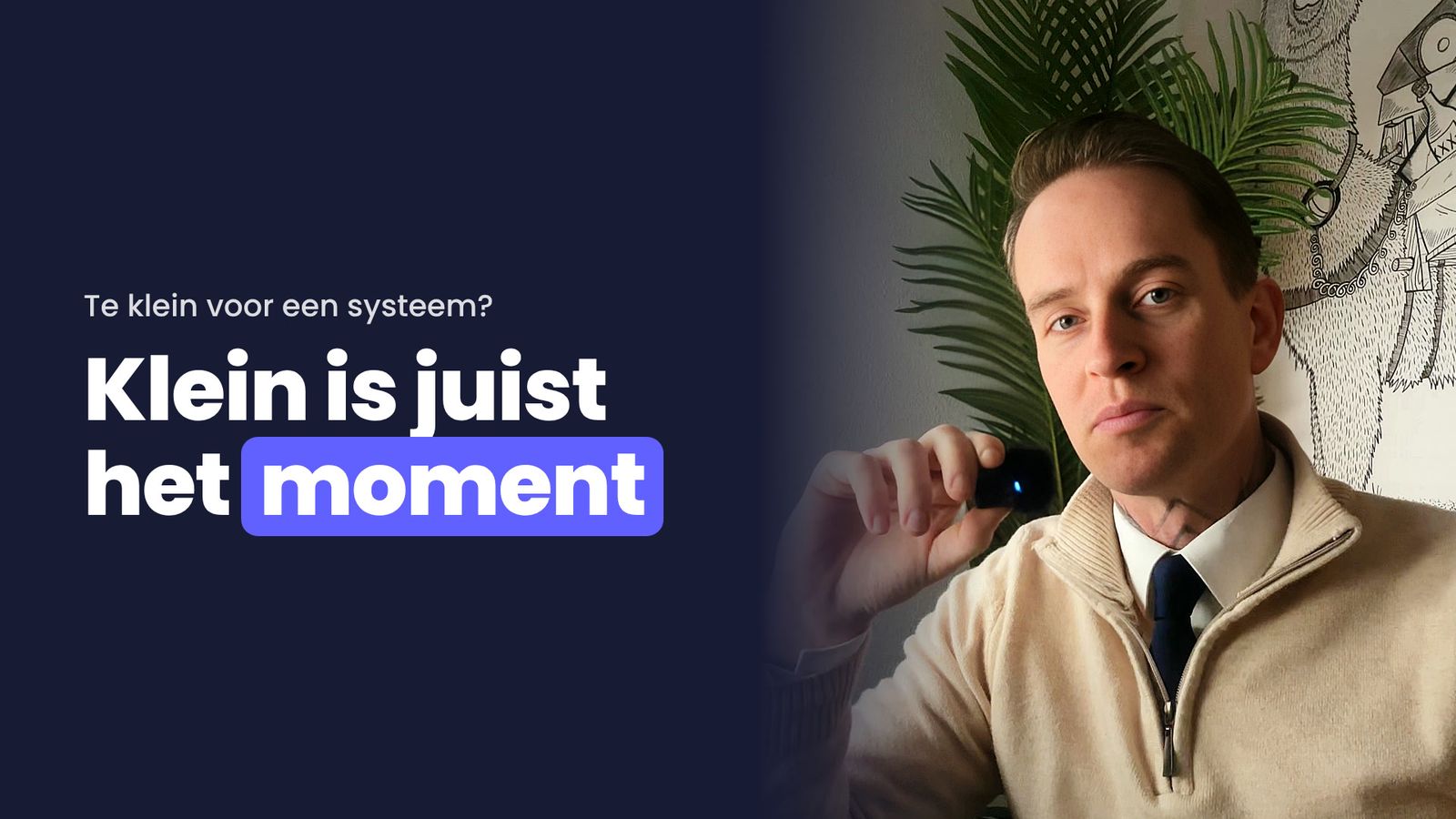
“Why do business owners think a new system is only for large companies?”
Business software for small companies Business owners think a new system is only for large companies because they hold four outdated beliefs: too expensive, too complicated, not needed and something for later. Those beliefs come from ERP projects costing a few hundred thousand euros, with consultants involved for months. For a business of 20 to 25 people, that picture no longer holds.
Transcript: Why do business owners think a new system is only for large companies?
Waarom denken veel ondernemers dat een nieuw systeem aletisch is voor grote bedrijven? Dat is mooi, maar daar zijn wij nog te klein voor. Dat is wat ik vaak hoor.
Dat snap ik enigszins ook. Maar er zitten een paar verkeerde denkbeelden achter. Het eerste beeld is een nieuw systeem is te duur.
Veel ondernemers denken aan de grote ERP trajecten van een paar ton. Met consultants die maandenlang over de vloer lopen. Dat is voor een bedrijf van 20, 25 man natuurlijk niet te doen.
Het tweede verkeerde beeld is het is ingewikkeld. Een systeem met honderden knoppen waar je mensen eerst een cursus voor moet laten volgen en waar je daarna alsnog met Excel naast gaat werken. Of het derde beeld is, het werkt nu toch?
Wij redden ons wel met onze lijstjes, dus waarom zou je iets gaan veranderen wat niet kapot is? Of als vierde, we doen het later wel. Als we groter zijn, dan pakken we het goed aan.
Maar die beelden kloppen dus niet meer. Een systeem hoeft niet in één keer alles te doen. Je kunt beginnen met één proces, bijvoorbeeld van offerte tot project.
Dat paal je eerst goed neer. Daarna voeg je stap voor stap iets toe, zoals Lego blokjes. Je betaalt dus ook niet voor wat je nog niet gebruikt.
Dan hoeft het ook niet ingewikkeld te zijn. Juist bij een klein team kan je het simpel houden. Alleen de kolommen of stappen die je echt nodig hebt.
En dan het werkt nog. Dat is eigenlijk precies het verradelijke. Het werkt tot je tegen je volgende groeipafloon aanloopt.
En dan moet je groeien en eigenlijk tegelijkertijd alles omgooien. En dat is juist het slechtste moment. Het beste moment is juist nu als je nog klein genoeg bent om het overzichtelijk in te richten.
Minder mensen die moeten omschakelen, minder data die moeten worden overgezet en minder oude gewoontes die erin zitten. Want grote bedrijven hebben geen systeem omdat ze groot zijn, ze zijn groot geworden omdat ze op tijd systeem hebben.
How does a small business start with a system?
A system does not have to do everything at once. Start with one process, for example from quote to project, and set that up properly first. Then add parts step by step, like Lego bricks. You only pay for what you use and keep only the columns and steps you really need.
Is a new system too expensive?
Only if you are thinking of ERP projects costing a few hundred thousand euros. If you start with one process, you do not pay for features nobody uses yet.
Isn't it too complicated?
A system with hundreds of buttons and a compulsory course often ends with Excel running alongside it. A small team can actually keep it simple, with only the steps that are needed.
Why not wait until later?
Lists work until the next growth threshold. Then you have to grow and overhaul everything at the same time, and that is the worst moment to change.
Large companies do not have a system because they are large. They became large because they had a system in time.
Frequently asked questions on this topic
When is the best time to introduce a system?
The best time is when a business is still small enough to set it up in a clear way. Fewer people need to switch, less data needs to be transferred and there are fewer old habits in the organisation. If you wait until the next growth threshold, you have to grow and overhaul everything at the same time. That is the hardest moment to change anything.
Which process is best for a small business to start with?
A common starting point is the process from quote to project. That process touches both sales and delivery and quickly gives you an overview. Once it is working well, you can add other parts step by step. That way the system grows with the business and there is no need to set up a large project all at once.
Why is 'it works fine for now' a risk?
Working with lists and Excel feels sufficient for a long time, and that is exactly why it is deceptive. It works until the business hits the next growth threshold. At that point the organisation has to grow and overhaul the way it works at the same time. Two big changes at once take more effort than one change at a quiet moment.

Stef van Krieken
Any questions? Chat with MondayBot
Chat with our bot (in Dutch), and if that does not help, let's just give each other a call.

Why do business owners think a new system is only for large companies?
More questions about sales
- Where does your business lose the most time?
- Do your processes need to be in order before you choose software?
- How do I show quick results after switching systems?
- Why does Excel suddenly go wrong after years?
- Why does my business get busier without revenue growth?
- Why don't systems replace people in the workplace?
Curious about monday CRM?
